

A useful tree visit starts with the yard, not a flat price sent from a photo of the trunk. Houses along Ridge Pike, Swamp Pike, and the river roads sit under oaks and maples that were large before the addition went on. A newer lot in Linfield may have a white pine too close to the garage and a serviceberry that only needs a few low limbs raised. Those are different jobs. This page is the plain version of how we decide, what each service includes, and when the season matters. If you already know the tree has to come down, the tree removal guide is the direct read. For a price, call (610) 860-4798 or use the form. A photo of the whole tree and one of the base is enough to start. We still walk the yard before we lock a number when wires, a roof, or a tight gate could change the plan.
What we sort out before we price a tree
A number that arrives by text, with no look at the landing area, is a guess. On a Limerick lot the guess is often wrong because the tree is rarely the only thing in the way. We want a few facts before we commit.
Species tells us how the wood behaves. A white pine can split up the trunk if it is cut like an oak. A dead ash is brittle and sheds limbs while ropes are still going up. A willow in the wet ground along the Schuylkill has roots that are not where a dry-yard maple would put them. If you know the name, say it. If you do not, a photo of the leaves and the bark is enough.
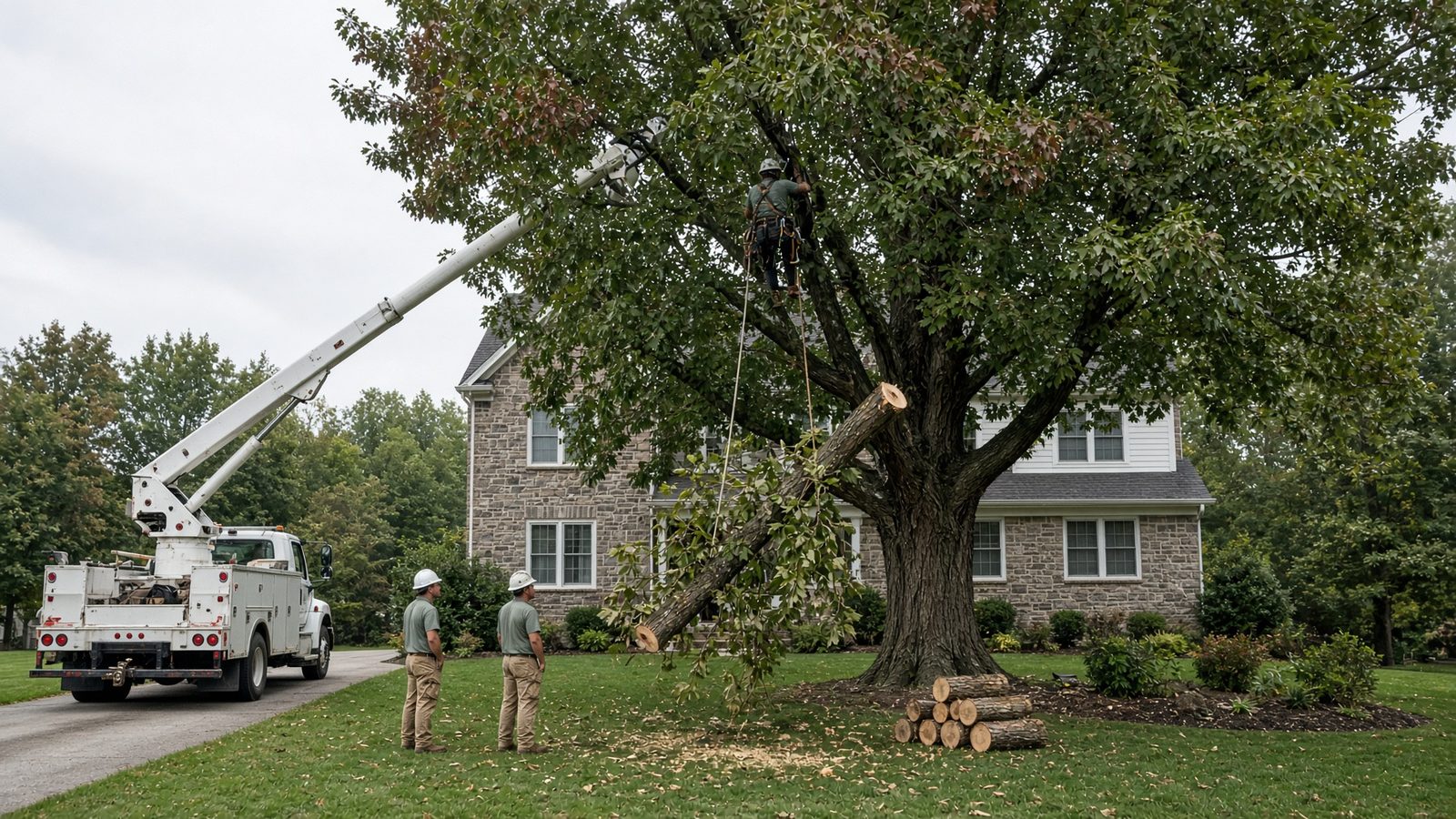
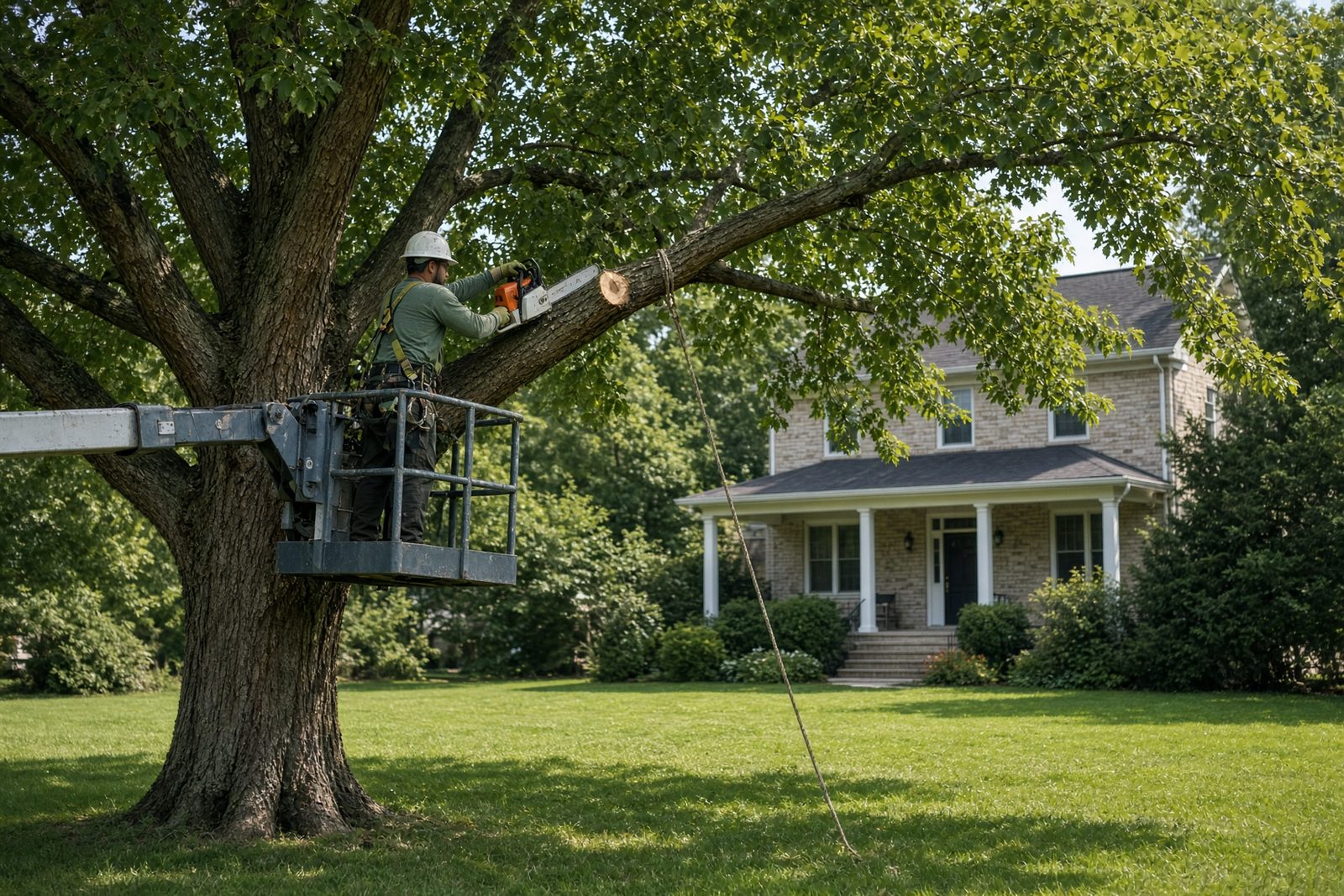
We look at the target next: the house, the neighbor's roof, the fence, the shed, the play set, and the septic field. A clear back lawn is a different day from a crown that covers the porch. We will say whether the safe plan is to climb and lower pieces, to set a bucket truck in the driveway, or to bring a crane because there is no honest place to drop anything.
Wires are their own question. PECO primary lines are not something we cut into. If a limb is grown through the high line, the utility has to make that safe before a climber works the crown. A service drop running to the weatherhead is a separate case, and we will tell you which one you have rather than treat them as the same.
Access changes the crew more than the species does. A truck that can park under the tree is faster than a backyard with a four-foot gate, a raised deck, and a slope between the street and the stump. Slopes, retaining walls, and invisible dog fences belong in the first conversation. So does the plan for what stays. Some households along the 422 corridor heat with wood and want rounds stacked. Some want every chip gone. Some want the stump ground the same day so the mower does not strike it on Friday. Those are separate lines on the estimate, not a surprise at the end.
Removal, pruning, grinding, and moving a tree
Tree removal is the right call when the tree is dead, split, leaning into a target, or standing where you are about to build. We dismantle and lower wood when the drop zone is tight, and we fell in one lay only when the landing area is honestly clear. Brush is chipped. Logs are left or hauled, as agreed before the saw starts.
Pruning and trimming is for a live tree you mean to keep. We reduce weight on long limbs, raise the crown over a roof or a driveway, and take out rubbing wood so what remains still looks like that species. We do not top trees. Topping leaves stubs, sunburns bark, and grows a broom of weak shoots that fails in the next ice load.
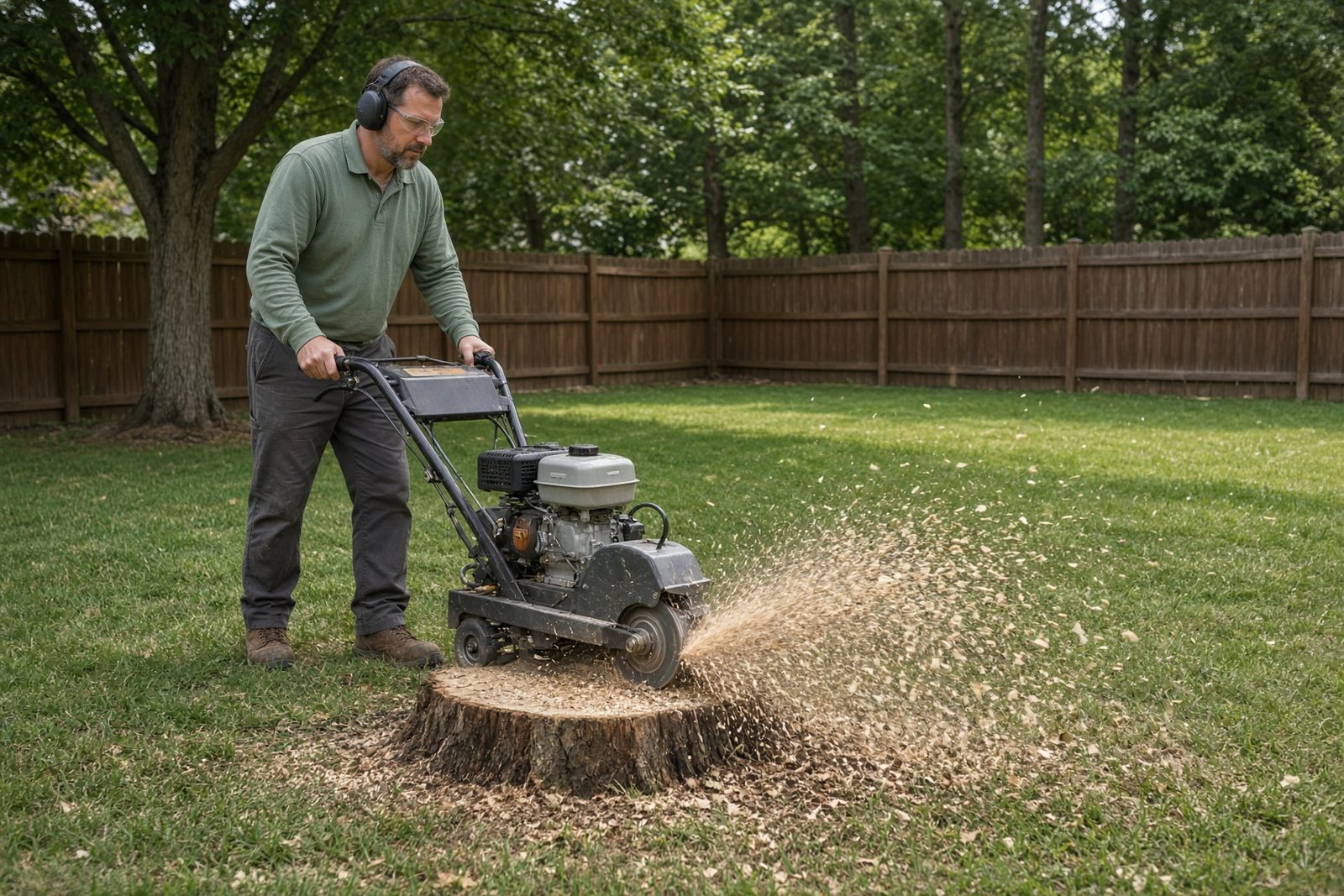
Stump grinding follows a removal, or it cleans up a stump that has been in the lawn for years. The machine chews the stump and the flare roots below grade. It is not an excavator. Roots farther out can stay in the soil, and we will say if a fence post or a new tree should wait until the chips settle.
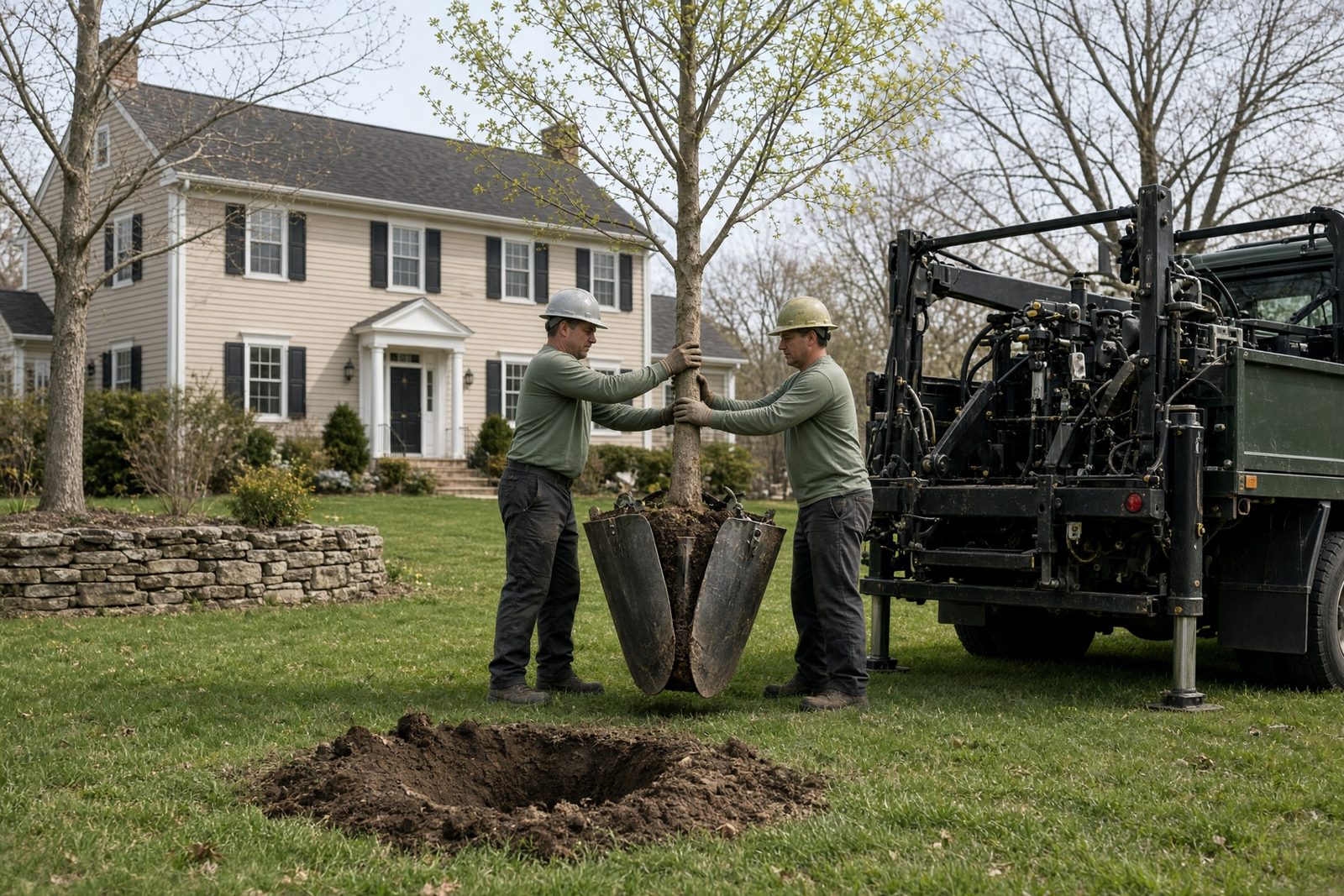
Transplanting is for a healthy young tree in the wrong place: under a wire, on the footprint of an addition, or shading a garden you are trying to grow. A tree spade or a dug root ball can move it when the trunk is still a manageable size and the season is right. We will also tell you when the tree is too large, too declined, or too close to a foundation for a move to be a fair use of the money.
When pruning is enough, and when the tree should go
Keep the tree if the trunk is sound, the flare is not buried in a mulch pile or soft at the lawn line, and the real problem is clearance or a few dead limbs. A mature oak over a Limerick house is doing work you will not replace with a nursery whip: summer shade and a root system already tied into the slope. Pruning that tree is usually the better job.
Take it down if more than half the crown is dead, if a crack runs into the trunk, if fungi are fruiting from a soft base, or if it is an ash that emerald ash borer has hollowed. Untreated ash in Montgomery and Chester Counties gets brittle fast. A lean the tree grew up with is often stable. A tree that used to be straight and is now tilting, with fresh soil lifted, is not. Callery pears, sold as Bradford pears, split at weak forks in wet snow. If the split reaches the trunk, removal beats a cable.
How an estimate and a work day go
- You call (610) 860-4798 or send the form with the address, the service, and a sentence about what the tree is doing.
- Text photos of the whole tree, the base, and whatever it is about to hit. The form does not take pictures.
- For a large tree or anything over a roof, we walk the yard before we lock a price. A small, obvious stump can sometimes be priced from a clear photo.
- The estimate names removal or prune, haul or leave the wood, grind the stump or not, and whether brush is included.
- On the day, the crew sets a drop zone and rakes sawdust off the lawn before leaving. Irrigation heads stay safe only if we know where they are.
If a high-voltage line is in the crown, we pause for the utility. We do not invent a permit. If the tree stands in the strip between sidewalk and curb, it may still belong to the borough, which comes up in Royersford, Spring City, Phoenixville, and Pottstown. Ask for a certificate of insurance when an HOA wants one.
Trees we keep seeing from Linfield to the river
Oaks still dominate older yards off Swamp Pike and Lewis Road. They want collar cuts, not a flush cut and not a long stub. In Pennsylvania, leave live oak pruning for winter or late summer, outside April through July, when beetles are most likely to carry oak wilt into a fresh wound. A dead limb over a bedroom is the exception and comes off when it is unsafe.
Silver maples and Norway maples planted against twins and stone colonials have outgrown the setback. We reduce end weight instead of stripping the inside of the crown bare. Ash is mostly a removal now. Once woodpeckers have worked the trunk, we would rather rig the tree while sound wood remains. White pines that only lost a few leaders can be cleaned up. A pine with a fresh lean and a lifted root plate is a removal.
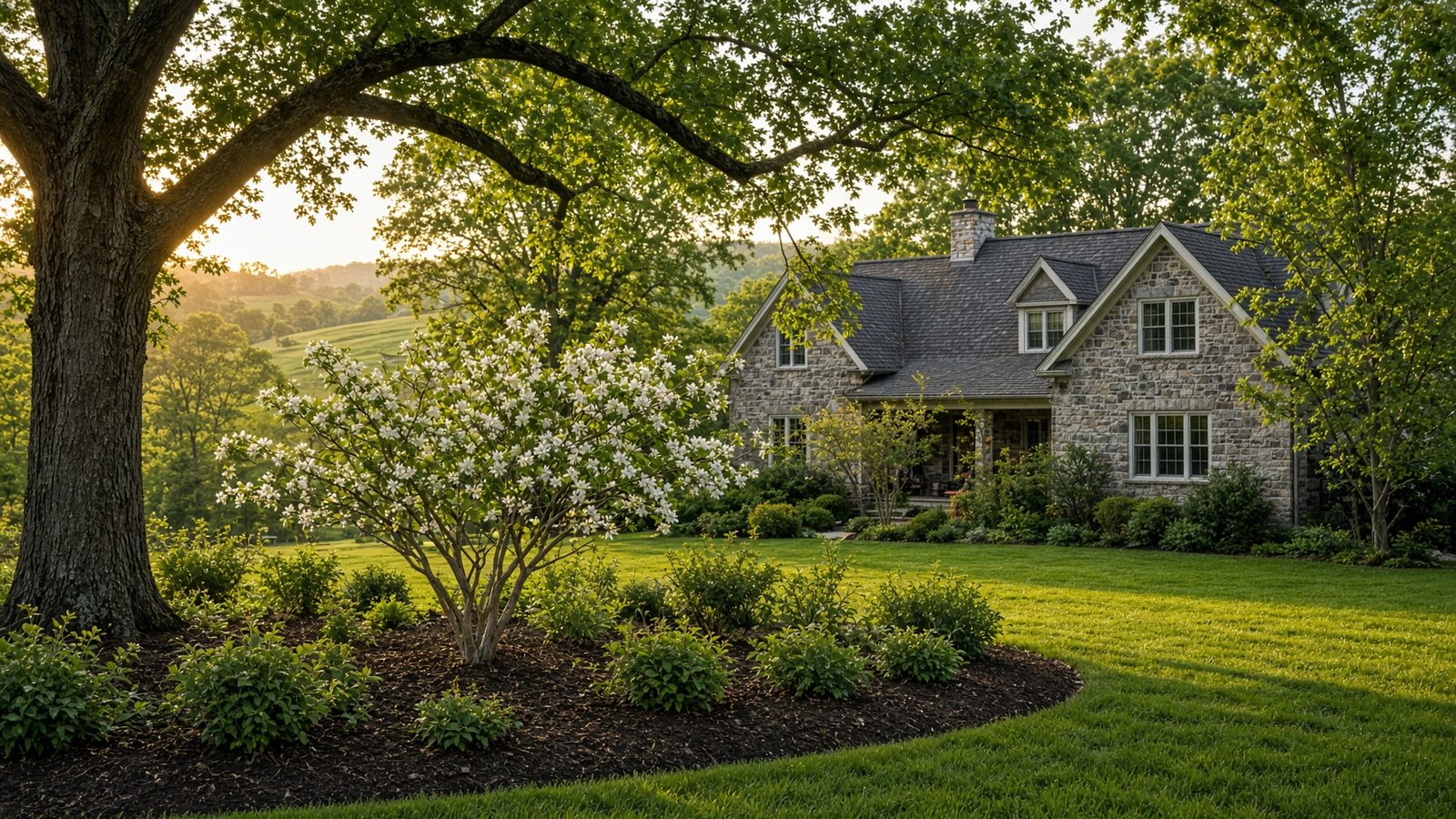
Japanese maples get sheared into mounds, then the bark sunscalds. Serviceberry, the native Amelanchier that flowers white in April on newer Limerick and Collegeville plantings, usually needs a few low limbs raised after bloom, not a hard renovation. Rust on the fruit is often cosmetic. Both are on the pruning and trimming page. Spotted lanternfly is a nuisance in both counties. It is not, by itself, a reason to remove a sound oak.
Storms, access, and the hours we answer
Summer thunderstorms and a wet snow are when the phone stacks up. Trees on structures and hanging limbs over walks come before yard cleanup that can wait a week. We will not promise every call a truck the same afternoon. Ordinary hours are Monday through Friday, 7:00 a.m. to 6:00 p.m., and Saturday, 8:00 a.m. to 3:00 p.m. Sunday is storm damage only. Email info@limericktreeservice.com is read with the phone. If a limb is on the house, call.
Towns around Limerick
Most of the work is in Limerick Township: Linfield, the neighborhoods off Ridge Pike and Route 422, and the lots toward the river. Royersford sits against the township. From there the drive is east toward Collegeville and Trappe, west toward Pottstown and Lower Pottsgrove, and across the river into Spring City and Phoenixville.
- Phoenixville for borough streets, the hills above French Creek, and larger lots toward Schuylkill Township.
- Pottstown for older maples on narrow lots and the yards out toward Sanatoga.
- Collegeville for Main Street, the Perkiomen valley, and the subdivisions between Trappe and the college.
- Royersford for Main Street trees, river-bottom ground, and stumps tight to fences.
- Spring City for the Chester County side of the bridge, including hillside drives.
The same crews also work in Trappe, Schwenksville, Linfield, Oaks, Upper Providence, Lower Pottsgrove, Sanatoga, Mont Clare, and East Coventry. If your town is not named and you are a short drive from Limerick, call. We would rather say no than leave you guessing.
Questions people ask before they book
Do you top trees to make them smaller?
No. Topping leaves stubs, weak sprouts, and a worse failure in the next storm. The honest choices are a careful reduction, a transplant while the tree is young, or a removal.
Can you grind the stump the same day?
Often, if the grinder fits and grinding was on the estimate. A narrow gate may mean a second trip. The stump grinding page explains the depths.
Will you move a tree instead of cutting it?
If it is healthy, small enough to ball, and there is a better spot on the property, sometimes. Large shade trees are a prune or a removal. The transplant page is the straight version.
Do you also mow or maintain beds every month?
No. We prune, remove, grind, and transplant trees, including ornamentals that were planted as part of the landscaping. A hedge with no tree involved is not our work.