

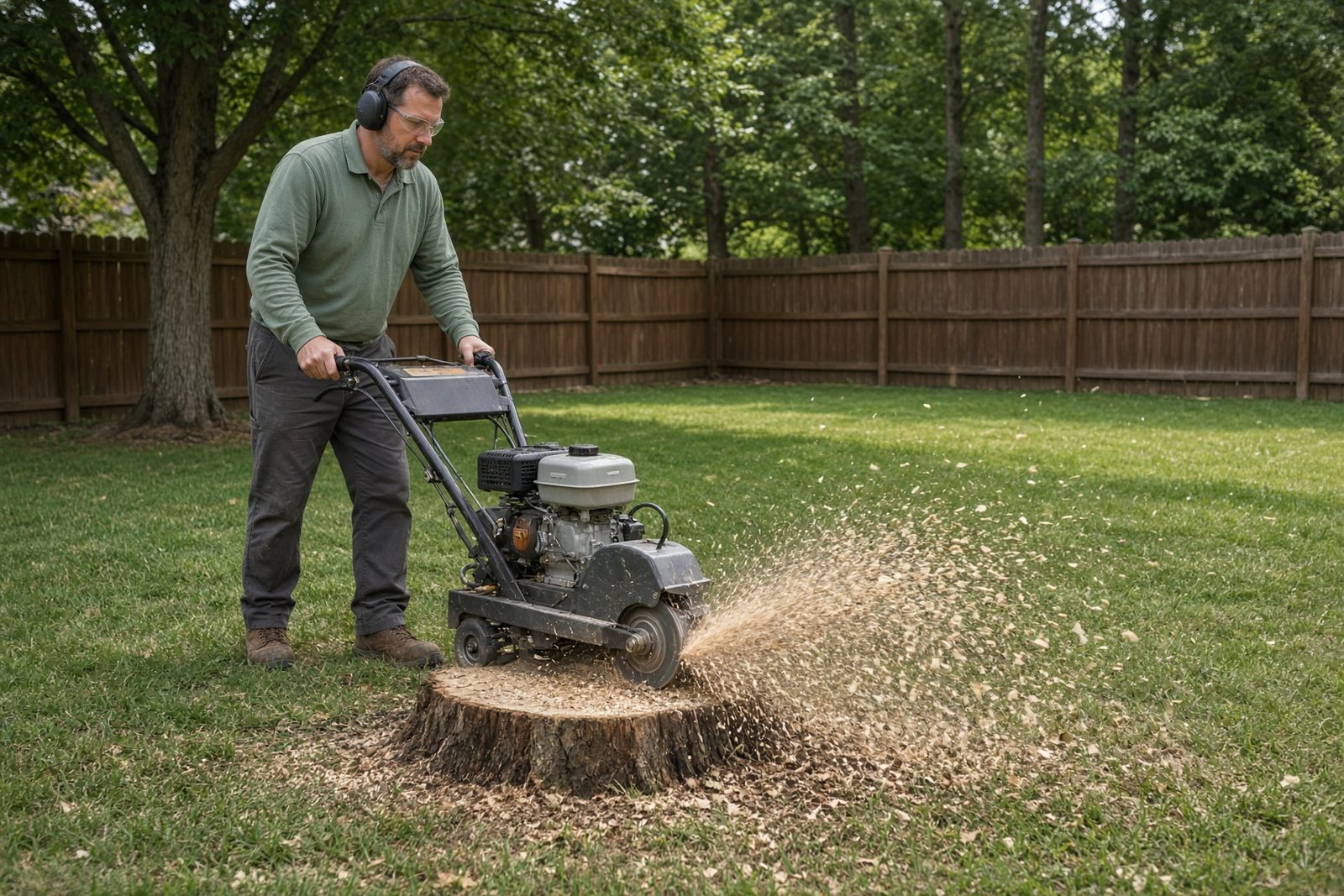
A stump is left because nobody asked to grind it, because the machine could not fit the gate the day the tree came down, or because a flush cut from years ago still throws sprouts. Grinding fixes the part you trip over. It is its own line on the estimate, not a vague cleanup. If the tree is still standing, start with tree removal. If you want the tree saved, that is a transplant, and there may be no stump at all.
What the grinder actually does
A cutting wheel sweeps the stump into chips. We take it below the surrounding grade and chase the thick flare roots that would still scalp a mower. The pile looks larger than the stump because chips fluff.
For a lawn you plan to seed, several inches below grade is enough that soil covers wood instead of a ridge. A fence post or a small shrub in that exact spot wants a deeper center. A new shade tree should not go in the middle of a fresh grind. The chips settle, the old roots rot, and the new tree sinks. Offset the planting, or wait a season.
A grinder is not an excavator. Finger-sized roots twenty feet into a bed stay in the ground and rot. They are not a trip hazard. If one surface root is still proud of the grass, we can chase that one. Chasing every root to the property line is a different job, and we price it only if you truly need the bed cleared.
Chips, sprouts, and the lawn
Keep the chips or we haul them. Fresh chips are useful on paths if you do not pile them on trunks. They are a poor mix for a vegetable bed the same month. For a lawn we rake chips out of the hole or haul them, and the hole wants soil, then seed and water. We leave it ready. We do not install sod and we will not call a grind a finished lawn.
Oak, maple, linden, and callery pear sprout from a flush cut. Grinding the stump and the flare removes most of those buds. A few suckers can still show up, especially on pear. Mow them while they are soft. Do not bury a stump under soil and call it gone. The mower will find it. We would rather grind it than leave a chemical "stump killer" in a yard with kids and dogs.
Access, utilities, and what to mark
The machine has to reach the stump. A larger grinder needs a path about the width of a small truck and will mark a saturated lawn. A walk-behind fits tighter gates. Backyard stumps in Royersford, Phoenixville, and Pottstown are often the walk-behind case. Tell us the narrowest gate, hinges included, before we promise same-day grinding. Call (610) 860-4798 with that measurement.
Have public utilities marked if a line might cross the stump. Irrigation heads and invisible fences are not on that ticket. Flag them. Rake river rock away from the flare, and move lights that are screwed into the root we have to cut. We can work carefully. We cannot promise a fixture survives if it is in the wheel.
How grinding fits the rest of the job
On a removal with a clear path, grinding can follow the same day. Combining them is one trip. If the stump is behind the house and the big truck stayed on the street, we come back with the smaller machine. The estimate says "same day" or "return trip."
Old gray stumps are fair game. A stump cut two feet high gets a saw cut first if the wheel cannot start on it. If the goal is a patio footing or a drain through that exact spot, grinding may be the wrong tool and you may need the stump dug. We will say that before you pay for a grind a footing will only uncover. For most lawns between Limerick and Collegeville or Spring City, grinding matches the complaint.
Several stumps on one lot are cheaper per stump than one lonely grind, because the machine is already there. Point out the row along a fence, not just the obvious one by the patio. After grinding, wait until the chips have settled before you treat the spot as finished grade. A rain or two will show the low center. Top it with soil then, seed, and keep it watered for a few weeks. If suckers appear the following June, a mower pass while they are soft is enough. You do not need another full grind for a handful of shoots. Surface roots that stay below the grass are left on purpose. Digging them all out would tear up more lawn than the stump ever did.
Questions about stump grinding
How deep do you grind?
Several inches below the soil for grass you will seed. Deeper for a post or a shrub in the middle. Not deep enough to pretend the whole root system is gone.
Can you grind against the house?
Often, with a smaller machine and the spray directed into the yard. Foundation plants tight to the stump usually have to be cut back or accepted as a loss. Tell us what you want saved.
Do you haul the chips?
Yes, if you asked. If you want them for paths, we leave a pile the truck can dump, not a spray across the lawn, and not a mound against a tree you are keeping.